
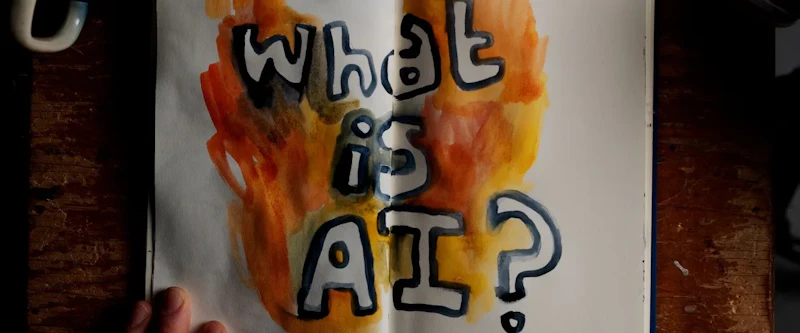
“I know people working on AI risk who don’t expect their children to make it to high school,” says one technologist in The AI Doc: Or How I Became an Apocaloptimist, a documentary in which filmmaker and father-to-be Daniel Roher interviews dozens of experts about the transformative technology, trying to understand what kind of world his son will be born into. It’s a clever, imaginative film, marked by rapid shifts in mood and perspective.
The film’s first part is notably grim, driven by anxieties about human obsolescence and extinction. There’s discussion of “power-seeking behavior” already seen among AIs, as in a simulated exercise where an AI with access to company emails blackmailed an adulterous engineer to prevent a planned shutdown of the AI; and the potential for problems with AGI (artificial general intelligence) that matches or exceeds human abilities in many domains, deemed imminent, and subsequent superintelligence, which may view humans with disregard if not hostility, much as we see ants. In one interview, Eliezer Yudkowsky, computer scientist and author of If Anyone Builds It, Everyone Dies, says his concern’s not about “the collapse of humanity” but “the abrupt extermination.”
Roher, spurred by his pregnant wife Caroline Lindy, who’s also a filmmaker, seeks out some hopeful side to AI’s prospects. Upbeat interviews follow, with visions of technology eliminating diseases, solving climate and energy problems, enabling vast prosperity. Scientists will do greater work than ever. People will be able to follow their passions rather than having to take a job for a paycheck. Roher and Lindy’s son’s options could include living on a Greek island as a poet or painter; or taking up residence in a space colony. Entrepreneur Peter Diamandis talks about enabling human brains to tap into the cloud.
Such scenarios, though, are hitched to dark possibilities. An AI that can serve as a personalized tutor could also provide individualized propaganda and brainwashing. Such technology might enable a 1984-like surveillance society to be efficient and lasting. Or, more mundanely, there might be widespread unemployment and hardship as human abilities are outpaced by machines; animation shows the interviewer’s son’s idyllic island dissolving into a homeless encampment. The vast wealth generated by AI may be concentrated in a few hands. And widespread access to AI’s capabilities carries its own dangers, such as uses for crime or terrorism.
Eager to see where the buck stops in decision-making on such matters, Roher presses for interviews with the handful of CEOs running major companies at the forefront of AI. His interviewees include Sam Altman of OpenAI and Dario Amodei of Anthropic. Both speak thoughtfully about their responsibilities; asked whether it’s a good idea to have children at the cusp of such tech change, Altman notes that he’s an expectant father too. An empty chair represents that Meta’s Mark Zuckerberg declined to be interviewed. Another is for Elon Musk, who agreed to an interview as head of xAI before withdrawing as too busy.
Competition among companies and countries weakens incentives for AI safety-testing and regulation. If two companies are in a close race in product development, the one less punctilious about safety is likely to pull ahead. Altman contends that OpenAI’s lead has given it greater leeway to conduct testing. Asked what would happen if it lost the lead, he replies that it would depend on who’d become the leader. He’d be particularly worried if an adversarial foreign government were to gain the upper hand with the most advanced AI.
Roher talks about how, as a response to the uncertainties of this new era, he’s determined to be the best husband and father he can be. But his wife dismisses this as “kumbaya bullshit,” and they move into discussions of the need for regulation, transparency and accountability in AI development, with companies for example held liable for inadequate testing. Older members of the family make the point that this isn’t the first time people thought the world was about to end; that their own youth saw the advent of nuclear weapons. The bottom line is that the optimists and pessimists about AI both have some excellent points, but who’s right will depend on what people do.
The AI Doc opens on March 27. I attended an advance screening in Manhattan, expedited by one of the film’s producers, Diane Becker, with whom I worked for Lou Dobbs long ago.
