
Lord of the Flies is so frequently used as a source of inspiration that traditional adaptations of the original text can’t help but feel derivative. A significant portion of the dystopian young adult novel series of the early-21st century, such as The Hunger Games and The Maze Runner, tackled similar themes of youths corrupted by survival instincts, even if they lacked the brutal cynicism of William Golding’s thesis. Stephen King cited the impact of Lord of the Flies on stories such as It and The Mist, both of which were both directly adapted into films and influential on iterative works. Earlier this year, there were two films that echoed the themes of Lord of the Flies; the Australian coming-of-age thriller The Plague modernized the “boys behaving badly” concept, and 28 Years Later: The Bone Temple created a terrifying cult leader in Jack O’Connell’s Jimmy Crystal, who was modeled after Lord of the Flies’ “King Jack.” Since its spiritual successors took on such fertile lives of their own, the need for a meat-and-potatoes Lord of the Flies film or series became mute.
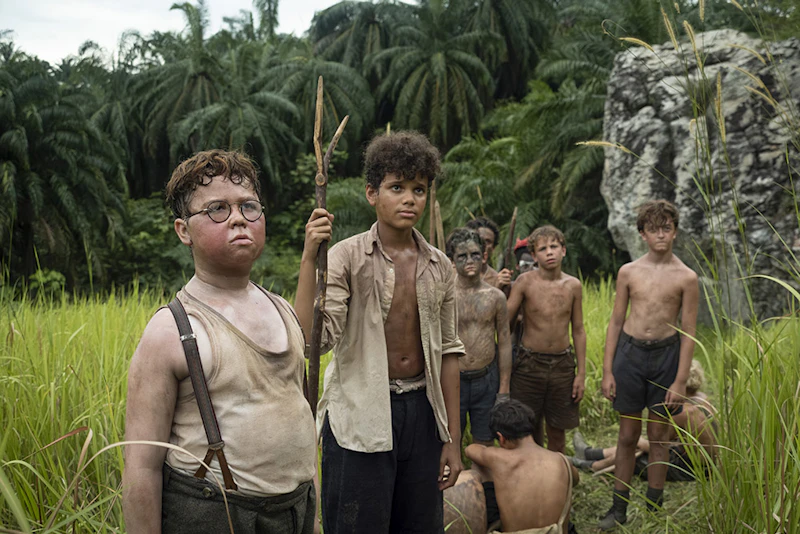
The latest Lord of the Flies adaptation is a four-part co-production between Netflix and BBC from creator Jack Thorne, who’s best known for last year’s Adolescence. There’s not much from the novel that isn’t in the series, but Thorne tries to add more details about each of the four leads, each of whom has an episode named after them; Piggy (David McKenna), Jack (Lou Pratt), Simon (Ike Talbut), and Ralph (Winston Sawyers) each get an installment that is ostensibly from their perspective, even if the structure of the story necessitates that the major events be told from multiple points-of-view. This is representative of the failings of 2026’s Lord of the Flies; despite the addition of context, there’s not much in Thorne’s version that hasn’t been assessed by seven decades of literary scholarship. The revelation of Piggy’s real name, background on Jack’s familial expectations, and examination of Simon’s religious upbringing solidify the allegorical roles each character has in Golding’s assessment of a society caught between chaos and order. As was the case with Adolescence, Thorne is so adamant about sending a message that the narrative is collapsed into that of an afterschool special.
Lord of the Flies is often taught in schools because it isn’t subtle; it’s a great introductory novel because its motifs and themes can be easily identified, and young readers can build their literacy for more challenging books. While the novel’s more simplistic language is representative of the developing minds of its characters, Thorne’s Lord of the Flies doesn’t give its protagonists more than a single defining trait. Jack isn’t a complex villain who’s overwhelmed by power, but a sneering bully who’s assumed authority over the other privileged kids in the choir from the beginning; he’s even styled as a blond, Aryan neo-Nazi. Piggy is still a stick-in-the-mud who might’ve made for a suitable leader if he wasn’t so obnoxious, and the show begs its audience to take pity on the plump, bullied kid. If you couldn’t already surmise that Simon was intended to be the spiritual scapegoat of the boys, Thorne is keen to include multiple shots of him lying in the river in a Christ-like pose, as if he’s about to be baptized.
The most interesting of the characters is Ralph, who’s given the space to mature into the charismatic, athletic figure who is elected “chief” by his classmates. While the novel presented Ralph as a natural figure of authority from the beginning, the show’s version of the character has to be coaxed into leadership by Piggy. There’s legitimate conflict within Ralph, who’s engaged in the tormenting of Piggy until his realization that there won’t be any adults to scold him; it’s his determination to avoid conflict that Ralph has allowed Jack to wield power over a section of the boys who are obsessed with hunting, even if it’s contributed to the established rules that they had initially agreed upon. Lord of the Flies is also a mixed-race show that is defiant of previous interpretations with all-white ensembles, but the casting of a Lithuanian-British actor in the role of Ralph isn’t called out. It’s a missed opportunity when considering how much of the added material in Lord of the Flies is extraneous, but the terrific performance from Sawyers stands out because he’s able to evoke emotion without leaning into melodrama.
The performances are solid all-around, even if the characterization of the boys is stiffly designed to emulate the more formal language of the 1950s. There are many reasons why Thorne may have decided against modernizing the material, but it’s hard for the conversational dialogue to feel authentic when the prose is so clean. The issue with Adolescence was that Thorne tried to explore issues of Internet bullying and toxic masculinity that shocked parents, but were redundant to any teenager that’s grown up in the social media era. Lord of the Flies has a similar problem because Golding’s assessment of how irrevocably ill-prepared the youth of his day were for a post-war society has proven true. That the violence and sadism of the boys in Lord of the Flies is now commonplace among teenagers addicted to video games and manosphere podcasts doesn’t make Golding’s novel less relevant, but it does put a burden on adaptations to offer more substantive criticism.
The ending of Lord of the Flies is one of the great ironic conclusions in 20th-century literature because it doesn’t make any sense from a logical perspective. That a naval officer who conveniently speaks the same language as the boys arrives right at the moment that Ralph is being hunted by Jack’s cultists is the ultimate instance of deus ex machina, but it's because Golding offered a more probing indictment of the adults; it’s sardonic that the officer would demean the boys’ inability to establish order when his generation has already annihilated itself during World War II. Thorne has become the type of writer who writes stories about children that are from the perspective of an adult. Lord of the Flies is an attempt to be gut-wrenching, but it pulled its punches.