
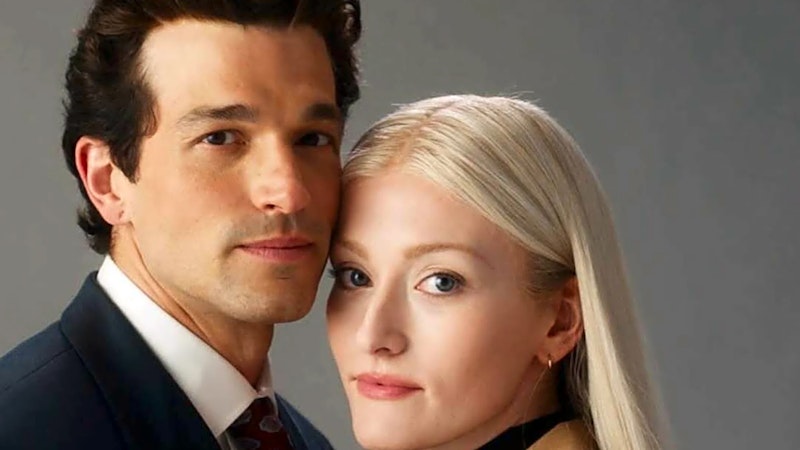
American presidents used to have a strong foothold in popular culture due to the popularity of Harrison Ford’s James Marshall in Air Force One, Bill Pullman’s Thomas Whitmore in Independence Day, or Dennis Haysbert’s David Palmer in 24. The last few administrations have significantly demystified the office, which has made it harder for fictionalized characters to leave a significant impact. It should thus come as no surprise that film and television has turned back to the Kennedy family as a renewed subject of interest. Recent years have seen films like Jackie, Chappaquiddick, Parkland, and LBJ that were centered on Kennedy scandals, and Netflix has commenced production on a multi-season historical series about the family’s history that’s intended to have the same appeal as The Crown had for the royals.
These projects would suggest that the American Camelot died in Dallas in 1963, avoided resurrection when Ted Kennedy’s secretary drowned at Chappaquiddick, and abruptly re-emerged during Robert Kennedy Jr.’s tenure as the nation’s leading conspiracy theorist. The reality is that the Kennedys never went away, and the only reason they’ve felt silenced is that even tragedy is rendered dull after a while. The death of John F. Kennedy Jr. and his wife Carolyn Bessette in a 1999 plane crash offered disbelief and sorrow, but they weren’t the subject of any hair-brained speculation. The cut-and-dry nature of the accident only hushed the fervent attention that had been paid to the reportedly turbulent marriage.
Love Story is a new anthology series from FX and Ryan Murphy, the latter of whom is thankfully only involved in name only. Murphy has exploited scandalous stories from American history into multiple sub-franchises of the American Crime Story and Monster shows, which have focused on such controversial figures as O.J. Simpson, Gianni Versace, Bill Clinton, Jeffrey Dahmer, Aaron Hernandez, Ed Gein, and the Menendez brothers. Although Murphy’s shows have been advertised by being lurid, Love Story is framed as a more traditionalist romantic drama, albeit one that has still included undocumented claims about the various controversies that Kennedy and Bessette were involved in. While the series is theoretically based on both research conducted by creator Connor Hines and the nonfiction novel Once Upon a Time by Elizabeth Beller, there are also details incorporated from the memoir of Michael Bergin, a male model who was once in sexual congress with Bessette.
The most distracting aspect of previous shows under Murphy’s banner was casting celebrities as well-known public figures whose activities have already been extensively documented by journalists. A cinematic biopic can make do with an actor who doesn’t look or sound anything like the person they’re portraying, as was the case recently with Cillian Murphy in Oppenheimer, but it’s a more glaring issue in a multi-part series in which word-for-word news clips are recreated; for example, no amount of makeup and physical acting would make Cuba Gooding Jr. feel like “the Juice.” Thankfully, Love Story chose to cast unknowns in the lead roles. First-time actor Paul Anthony Kelly has a remarkable turn as Kennedy, and his lack of experience made him the perfect choice to play a child of privilege who was handed opportunities that he was ill-prepared for.
The standout of Love Story is the performance by Sarah Pidgeon as Bessette, who isn’t portrayed as an idealistic princess swept off of her feet by a dashing American sovereign. Bessette has lived in the real world and incurred a degree of influence that’s more impressive than that of Kennedy’s because she didn’t have a last name to carry her; the first episode mentions that she gave fashion advice to Warren Beatty and Annette Bening at the premiere of Bugsy (a terrible film). A smart decision was made to not structure Love Story as a traditional rise-and-fall romance in which idealistic whims were dropped as reality set in; Kennedy and Bessette had issues with one another from the inception of their relationship, and the destructive press cycle that stemmed from their public arguments was inevitable.
The chemistry between Pidgeon and Kelly is so strong that the show’s energy is lost when they’re separated. While this is good dramatically, in the sense that it’s easy to root against the impending reality of their relationship’s implosion, the show’s let down by the cartoonish portrayal of their respective circles of friends and family. The one notable name in the cast is Naomi Watts, a veteran of Murphy’s biographical shows following her roles as Babe Paley in Feud: Capote vs. the Swans, who was cast as Jackie O. It was perhaps a performance that was doomed to fail given that Natalie Portman nailed the part in Jackie, a biopic about the former First Lady in the aftermath of her husband’s assassination. Watts’ accent work is awful, and the application of old-age makeup can’t help but conjure the uncanny valley. A performance by Dree Hemingway as Daryl Hannah, who’d been a romantic partner to Kennedy, is like a low-effort impersonation of the former star’s role in Splash, but Alessandro Nivola has fun as Calvin Klein, a long-term employer of Bessette’s. It’s an over-the-top, zany role for Nivola, but it would look downright restrained when compared to any archive footage of Klein.
After last year saw celebrity-centered historical dramas like Springsteen: Deliver Me From Nowhere, The Smashing Machine, and Christy all become flops, it’s hard to not see TV shows like Love Story as a desirable alternative. What the function is of a show that’s based on a true story, but not entirely accurate, is unclear, but Love Story has made the case that Kennedy and Bessette’s relationship wasn’t fairly judged the first time around.