
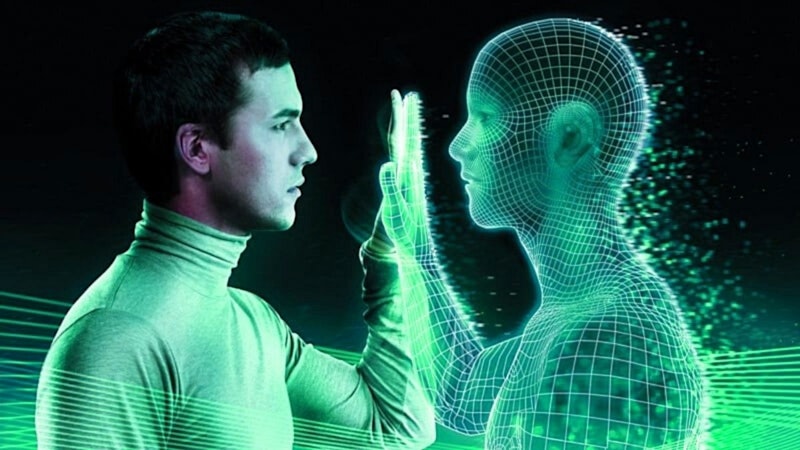
The simulation hypothesis has become the intellectual equivalent of a nervous laugh. It begins as a joke—surely this can’t be real—and ends as a coping mechanism. When history starts behaving like a badly patched video game, the idea that reality is run by bored programmers with a weak sense of irony starts to feel less like sci-fi and more like stress management.
The argument usually goes like this. Reality’s too weird, too glitchy and too implausible. Presidents return like sequels nobody asked for. The Kardashians display cockroach-level survivability. Every institution claims authority, then immediately discredits itself.
Enter the scientists, clutching equations and saying, “Okay, hear us out.” They assure us that there are laws. Not the familiar laws about heat, engines, and exploding kettles, but something stranger: infodynamics. The basic idea is disarmingly simple. The universe isn’t just made of stuff and energy. It’s also made of information. Not information in the philosophical sense, but information in the everyday sense—bits, patterns, instructions. The kind of thing computers live on.
We’re taught that everything tends toward disorder. Ignore your kitchen for long enough, and it’ll begin to resemble a crime scene. Ice melts. Batteries die. But information systems—genes, atoms, even the structure of the universe—often do the opposite. They simplify and compress. They get more efficient over time.
Think of your phone. Old photos get archived. Duplicate files vanish. Apps update themselves to run faster using less space. Information tidies up, trimming the fat, and deleting what it no longer needs. According to infodynamics, the universe does something similar. It quietly reorganizes, streamlines, and packs things neatly away.
Atoms settle into tidy arrangements. DNA doesn’t ramble endlessly. Instead, it finds shortcuts. Even viruses, which mutate constantly, change in ways that reduce unnecessary complexity. Instead of random madness, there’s a preference for order that works.
So when physicists notice the universe behaving less like a junk drawer and more like a well-managed hard drive, eyebrows rise. No one’s shouting “We’re in a computer” just yet. But the idea that we might be the ants in someone else’s school project no longer sounds insane.
And then there’s gravity. Once the most poetic force in the universe, it’s now reimagined in far less romantic terms. Not as a cosmic hug, but as housekeeping. According to this line of thinking, gravity’s real job isn’t just to make apples fall, or planets spin, but to stop the universe from becoming an unmanageable mess.
Left alone, matter would spread out evenly, like spilled sugar across a table. That might sound peaceful, but from an information standpoint, it’s a nightmare. Every particle drifting independently means more detail to track, more “stuff” to keep tabs on. Gravity does the opposite. It pulls matter together.
In information terms, that’s compression. Fewer locations. Clearer patterns. Less to monitor. Galaxies are efficient. Stars are neat bundles of matter. Planets are compact solutions. Gravity, in this view, is highly economical.
That’s why some physicists now describe gravity less like a force and more like a manager. It groups things and simplifies the layout. It reduces the informational burden of running a universe. Even the stars, it turns out, may be subject to budget constraints.
Plenty of physicists point out that simulating a universe this large would require obscene amounts of energy. More power than any conceivable civilization could muster. The idea, they shout, collapses under its own computational weight. Reality is too expensive to fake.
But that misses the emotional point. The simulation hypothesis persists not because it’s airtight, but because it fits the mood. It flatters a generation raised on interfaces. It turns metaphysical dread into technical curiosity. It replaces God with a server rack and calls it progress.
There’s also another temptation. If this is all a program, responsibility vanishes. History becomes a cutscene. Agency becomes optional. When things go wrong, you can shrug and blame the code. The danger of the simulation idea isn’t that it might be true, but that it encourages detachment. If nothing’s real, then nothing’s required of us. If this is all rendered, then commitment feels quaint.