
John Le Carre’s 1993 novel The Night Manager was prime for an adaptation because it could easily be transposed to any era. Tinker Tailor Soldier Spy had to sink a significant portion of its budget into replicating the claustrophobic Soviet Union and British intelligence offices of the 1970s, and The Little Drummer Girl faced potential backlash based on evolving public perceptions of the Israel-Palestine conflict. Comparatively, the villain of The Night Manager is the arms dealer Richard Roper, who could just as easily serve any number of sinister organizations, countries, or fictional entities based on when the adaptation was set. Although the politics of Prime Video’s 2016 adaptation were kept somewhat vague, Roper’s arsenal of weaponry made it dangerous for him to come into contact with Syrian, Iranian, or Russian extremists. The entertainment industry may have been revolutionized in the 10 years since The Night Manager was on the air, but much of global politics has remained the same.
A decade is a long time to wait in between seasons, even for a generation where the young cast of Stranger Things became parents by the end of the show’s run. However, the return of The Night Manager wasn’t anticipated as much as it was impromptu; the first season was a complete adaptation of le Carre’s novel, which never had any sequels. Le Carre’s death in 2020 meant that there was no further insight the late author could’ve given to showrunner David Farr about the characters or material, meaning that everything in the new season of The Night Manager is original. Perhaps, the delays to Prime Video’s second season of Mr. & Mrs. Smith caused the service to rush another spy show into production to compete with the dense market for espionage programming, including Netflix’s Black Doves, Apple TV’s Slow Horses, Paramount’s Lioness: Special Ops, and Showtime’s The Agency.
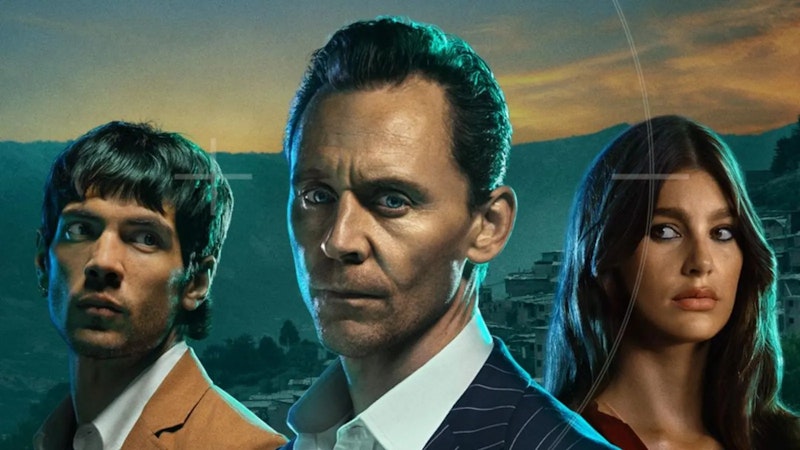
It’s to Farr’s credit that The Night Manager’s second season premiere doesn’t feel like it was plucked from a dusty shelf after years in development, because the 10 years have been arduous for the show’s protagonist, former military officer Jonathan Pine (Tom Hiddleston). Pine was a retired veteran by the time that the first season began, but he was called back to perform a special ops mission by the International Enforcement Agency handler Angela Burr (Olivia Colman). Pine made for a compelling hero because he was experienced enough to be a trusted government agent, but completely out of his depth with the psychology of spycraft. In going undercover to infiltrate the inner circle of Roper, played in a magnificently hammy performance by Hugh Laurie, Pine was asked to sympathize with those that reap benefits from political violence.
Much like his character, Hiddleston’s able to slip back into the role nimbly, even if he isn’t the fresh-faced patriot he once was. The end of the first season saw Pine forced to kill in cold blood for the first time since his days in the British Army, and the exposure to carnage has continued to keep him up at night. The most effective scene in the series premiere is a brief cameo by Noah Jupe as Danny, Roper’s son, who was saved by Pine during a raid on his father’s compound. In the decade since the first season, Jupe became an accomplished actor in his own right with roles in Ford v. Ferrari, Honey Boy, and last year’s Hamnet. That the amiable young boy became a brooding, self-loathing young man in the time between Pine’s adventures points to the reality not often seen in espionage fiction; life goes on after the most traumatizing of circumstances, even if progress has come to a standstill for men like Pine. The simple recognition that even the villain has a family, and that the heroes have regrets, is what has elevated a true le Carre adaptation over his countless imitators.
The passage of time is something not delved into by le Carre, whose novels were frequently set within a concentrated period. However, those who saw the interviews the late author gave in the documentary The Pigeon Tunnel know that he became reflective when asked to consider the various aliases his characters adopted over the years. When Pine’s shocked to be referred to by his given name, it’s not just because he’s spent 10 years going by a new identity. The man who took down Roper was replaced by a low-key surveillance expert for whom globe-trotting adventures are out of reach. The second season of The Night Manager is a little too complicated for its own good, but Hiddleston’s grounding performance is able to keep Pine’s goals in perspective. While part of Pine may have been waiting for another chance to put his skills to good use, he’s repressed anxieties that he’s crossed a line.
Finding an actor to match Laurie’s theatricality would’ve been a challenge, but Diego Calva’s role as the Columbian arms dealer Teddy Dos Santos is a suitable enough replacement; if Laurie played Roper as a smug businessman with flights of superiority, then Calva’s villain is a slick, smooth-talking take on a Bond villain. Whether The Night Manager is sustainable as a long-term series remains to be seen, but the thoughtful aging of the characters is enough for the second season to justify its existence.