
California’s bleeding billionaires now that Democrats are trying to impose a one-time, emergency five percent “wealth tax” on the roughly 200–250 state residents in that category. So far, at least six billionaires have fled the state; the most popular destination is Miami. This alone represents a potential loss of $27 billion in tax revenue.
Wealth managers and tax advisors report that another 15 to 20 billionaire families are considering relocation, opening up the possibility that tax will end up being a money loser for California.
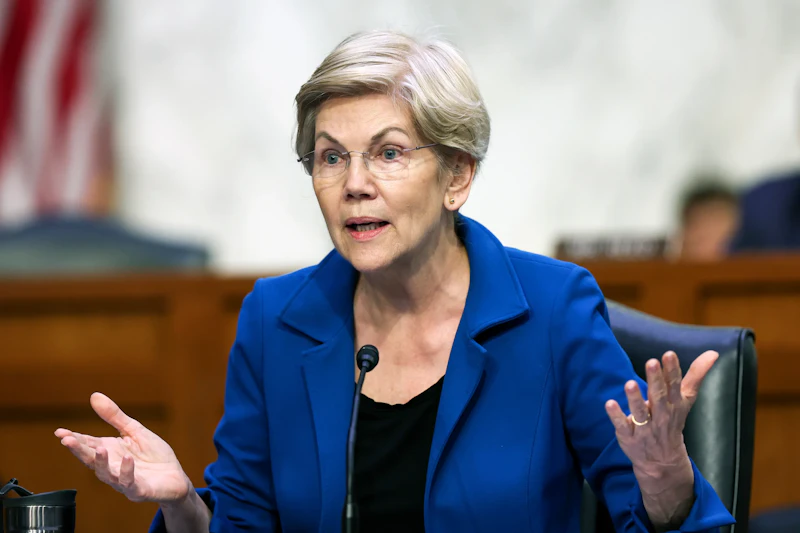
At the federal level, Sen. Elizabeth Warren has dusted off her old wealth tax plan which would deny Mark Zuckerberg and his tech peers their tax haven in Florida. The way the Massachusetts senator is selling the proposal is that it's an easy, one-step solution to fund universal childcare, lower housing costs, expand Medicare, provide free community college education and, according to her promotional materials, “still have money leftover!” Beware of those exclamation marks in sales material.
The “Ultra-Millionaire Tax Act” is proposing: “For every dollar they own over 50 million, they pay two cents. And for every dollar they own above one billion, they pay one cent.” That's a three percent tax on billionaires’ assets, not their incomes, which is why the language refers to “owning” dollars rather than “earning” them as income.
On the surface, the plan looks great. A 2025 Pew Research Center poll of Americans showed nearly 60 percent of respondents support higher taxes on the wealthy. How could it even be called “soaking the rich” if the highest tier of the 200,000 or so Americans targeted would be taking a mere three percent haircut? These are the billionaires that Warren—along with her fellow ultra-progressives—characterizes as the enemies of society who hog all the wealth. It's a black and white matter for AOC, who has argued that the economic system that allows billionaires to exist alongside extreme poverty is immoral.
While there was a temporary “net-worth” tax on very wealthy individuals during WWII, and the federal government taxes estates, the U.S. has never had a permanent, broad national wealth tax like the one Warren’s pushing. Similar taxes have a history in Europe, but not a successful one. France imposed one in 1988, but abandoned it in 2017. Sweden had a wealth tax for years, but abolished it in 2007. Economists had found that it raised little money when the economic side effects, such as discouraging entrepreneurship and exorbitant administrative costs, were factored in.
Germany, Denmark, Austria, the Netherlands, and Finland have also dropped their wealth taxes. In general, the cost and complexity of calculating assets—some of which, like art, are nearly impossible to value—every year isn’t a workable solution for raising tax revenue and addressing the “income disparity” that's causing so much anxiety among progressives.
Warren, a Harvard economics professor, is well aware of the European failures, so she's tightened up her plan to eliminate the loopholes, at least in her mind. Her targets are the ultra-rich who she knows have few defenders beyond the ones they pay to protect their wealth. With only a couple of hundred thousand or families affected by the tax, she's hoping to keep administrative costs down to a reasonable level. But that “reasonable” level includes a $100 billion investment in the IRS. Moreover, Warren has a plan aimed at preventing the shifting of assets offshore, a reality that helped doom the European wealth taxes. Wealthy U.S. citizens who renounce their citizenship for tax purposes will be assessed a 40 percent “exit tax” on the net worth above $50 million.
Democrats, when proposing tax hikes, don't do a cost/benefit analysis. Rather, they do a “benefit” analysis focusing on rosy estimates of all the revenue that’ll be raised. Republicans look into the potential negatives. According to economists at UC Berkeley, the $100 billion investment required to beef up the IRS could generate approximately $6.2 trillion in revenue over a decade. This estimate doesn’t cover the macroeconomic costs of raising all this revenue.
Proponents of the wealth tax argue that most wealth isn’t taxed the way income is, as the U.S. tax system mainly taxes paychecks and small business income. Large fortunes, they correctly point out, grow mostly through investments, and that growth often isn’t taxed until the asset is sold.
Progressives complain that the very wealthy often pay lower “effective” tax rates than wage earners, but their total tax contribution still vastly exceeds that of the bottom 50 percent of earners—those making below $50,000 annually who contribute three percent of total federal income tax revenue each year.
There’s something depressing about oligarchs flaunting their wealth with billion-dollar weddings, “concierge doctors,” and luxury survival bunkers while not balancing out their ego-driven self-indulgence by financing measures that would make life easier for the hard-working people who have to fight for every trickle-down scrap. It suggests a lack of moral fiber. But the wealth tax is neither politically nor economically the solution.
Republicans oppose such a tax overwhelmingly, and centrist Democrats are leery of it. Even with Democratic control of the White House, the 60-vote threshold in the Senate makes passing a new, direct tax on assets little more than a class- warrior pipedream/useful populist campaign slogan within our current political dynamics.
Maybe it's time for the Democrats to seek more creative and practical means to rectify the “wealth inequality.” While Bernie Sanders can't give a speech without railing against the billionaires that are holding America back from the socialist utopia he envisions, he's only tilting against windmills. Wealth inequality is built into the entrepreneurial-friendly American form of capitalism that's produced so many successful billionaires and all the jobs they bring with them.
Having a boogeyman to rail against is a standard scapegoating tactic in the populist playbook. The truth is that much of the left-wing, Marxist-tinged animosity against the rich stems from envy. Democrats should ditch that negativity and focus on prosperity and mobility rather than obsessing over the relative gaps. Wealth isn't a fixed pie that billionaires are hogging too much of. They increase the size of the pie.
The idea is to give those in the lower economic tiers a bigger slice of that larger pie. A good start would be easing up on the restrictive governmental job-licensing requirements applied to around 1000 occupations now, up from a couple of decades ago. They hit low- and mid-skill trades hardest. Zoning and land-use deregulation could massively increase housing supply, making housing more affordable and construction jobs more plentiful. Politicians could propose expanding technical/vocational education over the traditional four-year paths that leave so many with poor job prospects and burdened by debt.
Opportunity and cost reduction are key to raising “absolute prosperity.” Railing against billionaires is a performative hobbyhorse useful for producing little more than loud applause at political rallies.

