
Most conversations about food insecurity start at the grocery store. Prices go up. Access goes down. People talk about budgets, wages, supply chains and policy failures. But the real emergency begins long before any of that. It starts in the soil. More specifically, it starts when the soil can no longer feed the plants that feed us.
Across the country, farmers are running out of ground that still works. Years of chemical fertilizer dependence, tilling, and soil-stripping practices have left fields exhausted. When the land stops producing, everything built on top of it becomes unstable. Households feel the pressure at the register only after growers have scrambled quietly for years. Most people never see the early warnings because they happen far away from the aisles and headlines.
The warning signs showed up long before eggs hit six dollars a dozen or produce became an unpredictable luxury. Fertilizer shortages during the pandemic exposed how fragile the system really was. Large operations that had relied on industrial inputs for decades suddenly found themselves priced out or unable to source what they needed. That pressure didn’t disappear when shelves refilled. It just shifted to the soil itself, which was already pushed past its ability to recover without help. When the ground weakens, it doesn’t matter how many trucks or policies or subsidies are thrown at the problem. Food production becomes a gamble.
Soil collapse isn’t dramatic. It doesn’t arrive the way storms or droughts do. It shows up as smaller harvests, weaker plants, fields that take more input every year to produce the same yield. Farmers notice first, long before consumers or policymakers. By the time households see higher prices or empty shelves, the damage has accumulated for years. A system built on extraction can keep up the appearance of stability right up until the moment it can’t.
We see that fragility every week on our small farm in West Virginia. We raise rabbits for meat and manure, and their waste is one of the most valuable resources produce. It moves faster than anything else we sell. Gardeners, greenhouse operators, and large acreage farmers ask if we have extra manure. The largest request we’ve ever received came from a desperate grower asking for five dump trucks of rabbit manure. Not compost. Not topsoil. Manure. That level of demand only makes sense once you understand how thin the margin’s become. When the soil collapses, the food system follows.
People assume food comes from industrial agriculture. They assume scale guarantees stability. But the moment their ground stops cooperating, the same large operations start pulling from farms like ours. The growers who claim small producers don’t matter are the first in line when they need the resources we build quietly with almost no support. The entire system leans on the people it ignores.
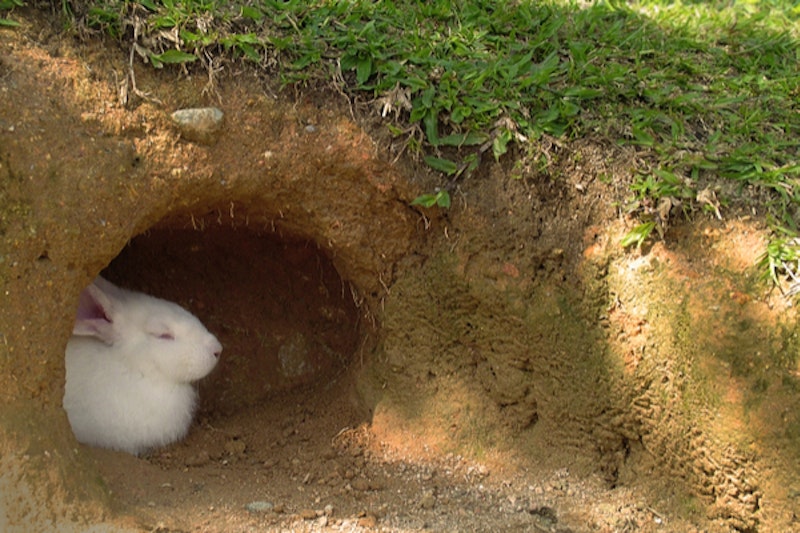
Rabbits are an example of that overlooked foundation. A single rabbit produces a surprising amount of manure. It’s cold, meaning it can be used directly in gardens without burning crops. It’s rich in nitrogen, phosphorus, and potassium. It breaks down fast. It restores soil that’s been mined for decades. We have a doe named Okra who refuses to be bred. She has no interest in it, and we don’t force her. She still earns her keep every day. Her manure is fine, dry, consistent, and some of the best we produce. She builds soil.
Most people never learned that this kind of sustainability is simple and immediate. I once spoke at a local farm event about rabbit manure, and the shock on people’s faces said everything. Their kids’ old pet rabbits had produced a gold mine for years. They’d been throwing away something that could feed gardens, restore land, and keep food production alive. The sustainability people talk about online is decorative. The real thing looks like manure falling through a hutch into a bin that will rebuild a field.
When we mix rabbit manure with our poultry bedding, compost that should take months breaks down in weeks. The nitrogen surge from the rabbits feeds the microbes that tear through the carbon-heavy material. Waste becomes soil, soil becomes food, food becomes security. It’s the simplest cycle in agriculture, and it’s the one system designed to work without corporate inputs or fragile global supply chains.
This isn’t just a farm story. It’s an early indicator of where the country’s headed. Soil health rarely makes national news because it doesn’t fit neatly into a political narrative. There’s no headline for ground that’s losing structure or for fields that produce less every year. But when people wonder why groceries cost more or why food assistance programs buckle during disruptions, the answer’s beneath their feet. The crisis doesn’t start in the checkout line. It starts in the dirt.
And once soil breaks down, there’s no quick fix. Rebuilding it takes years of organic material, steady inputs, and practices that don’t destroy what’s left. It also takes the kind of small producers the larger system has spent decades dismissing. The same farms that get written off as insignificant are the ones rebuilding the ground that keeps everyone else fed.
People look at full grocery store shelves and assume stability. They don’t see the farms calling small producers begging for manure. They don’t see how quickly soil health is unraveling. They don’t see that the foundation holding everything together is maintained by operations small enough to ignore and necessary enough to exploit.
Everyone should own a rabbit. Not as a hobby or novelty. But because the future of food security starts in the soil, and the soil depends on work most people never see.