
The Democratic Socialists of America are the ascendant force in American politics. Seven DSA-backed candidates for the House of Representatives have already won their primaries, advancing them to the general elections in November. On Tuesday, primary elections were held in five states—Kansas, Michigan, Missouri, Virginia and Washington. Those elections pitted standard-issue candidates with cross-aisle appeal against insurgent campaigns with the potential to draw in younger voters and tap into the widespread anger on the left.
The voters have spoken. The results for DSA-backed candidates for the U.S. House of Representatives are as follows: For the second time in two years, Cori Bush lost to Wesley Bell (this one was a blowout) in a rematch for Missouri’s 1st congressional district seat that served as a referendum on U.S.-Israel policy. AIPAC and its affiliate super PACs poured millions of dollars into ads backing Bell and criticizing Bush's outspoken opposition to Israel's military action.
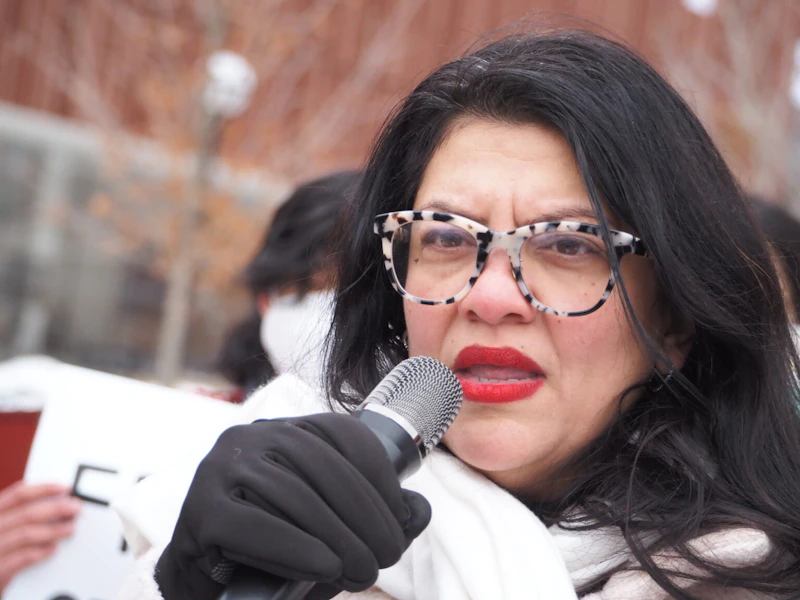
Incumbent “Squad” member Rashida Tlaib cruised to victory in Michigan's 12th district with 73 percent of the vote. DSA arch enemy AIPAC stayed out of this one, conceding that the district’s heavy Arab-American population made the Muslim, Arab-American candidate untouchable.
State Representative Donavan McKinney, with the support of allies Bernie Sanders and Rashida Tlaib, unseated incumbent U.S. Representative Shri Thanedar in an upset in which he secured 51.9 percent of the vote. Thanedar was a member of the DSA until 2023, when he renounced his membership. That's a bad career move in today's Democratic Party.
Hartzell Gray, by a two-percent margin, lost the primary election for Missouri’s 4th congressional district, thus putting a damper on the local chapter of the DSA’s effort to introduce socialism in a historically conservative region of the nation.
Nila Debanath, an emergency room physician, lost to establishment Democrat Elaine Luria in the primary for Virginia's second congressional district.
The marquee matchup on Tuesday was for Michigan's open U.S. Senate seat. In the Democratic primary, Abdul El-Sayed, who wants to be the first Muslim senator, squeaked by moderate U.S. Representative Haley Stevens in a race that was not supposed to be that close. While El-Sayed holds many radical positions—e.g. the release of all convicted prisoners—he doesn’t identify as a DSA member.
El-Sayed shares with the above DSA candidates the hardline anti-Israel stance required to succeed in that organization. All of them have accused that nation of genocide in Gaza. They’ve also advocated for Medicare for all, free college educations, and the abolition of ICE.
So far in this election cycle, nine DSA candidates have won the Democratic nomination for a House seat. The organization has undergone a remarkable political renaissance since writer/activist Michael Harrington was the driving force in founding it in 1982 as a small, insider lobbying group aimed at nudging the Democratic Party toward a Nordic-style social democracy in which high taxes fund a robust social safety net.
But the current, muscle-flexing DSA’s abandoned the incremental approach, instead switching the plan to identifying left-wing figures and running them in primaries against established Democrats. This strategy shift led to AOC’s surprise 2018 primary victory over Joe Crowley, who’d been in office for 10 terms.
Having the word “socialist” in the name of a political group isn’t the automatic marginalizer it was in 1982. Younger people no longer associate socialism with failed, state-run command economies. Instead, they see it as a system that provides them protection from the laissez-faire capitalism they feel has burned them to the point where they're saddled with college loans and still living with their parents as they approach 30.
The feelings of hopelessness and insecurity this lack of independence has produced inevitably changed how many young people look at politics. Economic anxiety has done much to bolster the ranks of the DSA, which now has over 120,000 members, up from 7000 in 2006. By the end of the year, its ranks will probably have ballooned to 500,000.
Young voters, seeing DSA-endorsed candidates winning elections, think of the organization as a viable alternative to the legacy Democratic Party that's failed them while fixating on its progressive, identity-based agenda. Over the past decade, the DSA, via its youth and student wing—the Young Democratic Socialists of America (YDSA)—has beefed up its campus presence, transforming it from an informal network of social clubs into a structured operation. The YDSA now has more than 150 active chapters across the nation on major public universities, private colleges, and community colleges. YDSA members automatically become members of the senior DSA organization.
The two major catalysts for the DSA’s evolution from low-key, bookish pressure group into an organized, media-savvy electoral force were Bernie Sanders’ strong presidential runs in 2016 and 2020, and Trump’s 2016 victory, which was a massive, out-of-nowhere pendulum shift that made the center-left faction of the Democratic Party look hapless.
Sanders’ 2016 primary campaign had already introduced the public to the term "democratic socialism,” so when the unthinkable happened in November, the DSA brand was well-positioned to attract the hordes of discontents.
Michael Harrington designed the DSA to work alongside the Democratic Party, but his organization, in its current “movement” iteration, is eating its host's body, just like MAGA did to the GOP. The pre-Trump Republican Party is hardly recognizable now, and that's become the Democratic Party's fate as well.
The Bernie bros and all the young, college-educated young DSA people have the chaotic, radicalized energy of the inchoate MAGA movement. That's got mainstream Democrats quaking, so they're taking in the positions of the DSA and repackaging them as their own policies.
Even solid progressives, like former New York congressman Dan Goldman are realizing they're no longer safe in the primaries. Up-and-coming Democratic politicians are espousing the DSA platform because it's easier to win with them than without them.
Yesterday's Democratic Party, now on its heels, can't do much to stem the rising DSA tide because it has already moved so far to the left—just not far enough to call for tearing the whole system down as the DSA hopes to. Soon enough, it’ll be the DSA's party.