
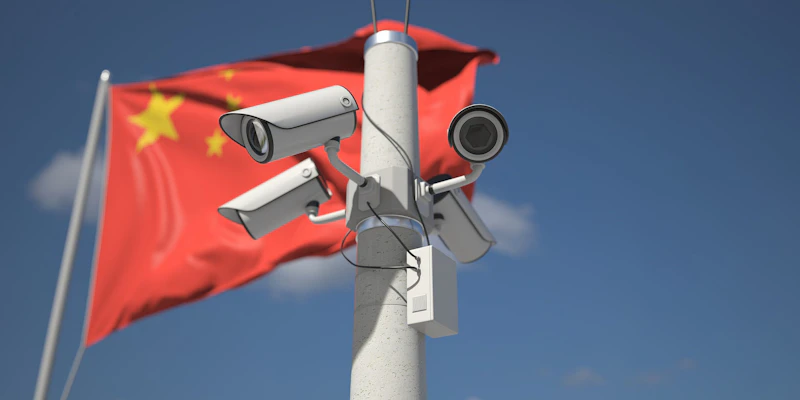
The Chinese Communist Party (CCP) is strategic. When it comes to physical technology, its dominance of global supply chains is impressive. It’s also alarming.
When a state-backed industry undercuts foreign competitors on price, it drives local producers out of the market. American firms fold or file for bankruptcy protection. This leaves Western automakers entirely dependent on Chinese factories for critical hardware. Such a strategy is suicidal because it gives Beijing a direct, operational lever over international manufacturing pipelines. By underwriting production costs, Beijing effectively buys market share. This erodes American industrial resilience, ensuring that crucial supply chains run through dangerous foreign hubs rather than domestic ones.
Physical dominance converts directly into control over civilian life. A single country controlling key parts for everyday transport creates a massive, structural vulnerability. A sudden trade dispute or military escalation over international waters could prompt foreign officials to halt exports overnight. American automakers would find themselves unable to ship completed vehicles, stranding entire fleets, destroying local dealerships, and halting domestic assembly lines. This isn’t a hypothetical risk. When an aggressive foreign state owns the blueprint and the factory floor for essential vehicle parts, they hold a kill switch over American commerce.
The immediate hardware threat takes the form of small, laser-firing sensors mounted to vehicle roofs, bumpers, and side mirrors. Known as LiDAR (Light Detection and Ranging), these sensors constantly bounce light off every building, pedestrian, and passing car to generate hyper-detailed, three-dimensional maps of their surrounding environments. Vehicle manufacturers adopt these devices because foreign subsidies dropped their prices from tens of thousands of dollars to a few hundred bucks. By embedding sophisticated foreign eye-in-the-sky technology into millions of cars and delivery trucks, American automakers traded long-term security for short-term profit margins.
These lasers scan military bases, power grids, drinking-water facilities, and local bridges with absolute precision. The resulting digital maps offer pinpoint layouts of secure infrastructure that no satellite photo can match, capturing exact elevations, physical entrances, structural vulnerabilities, and daily security guard patterns. Foreign intelligence agencies spend billions of dollars trying to gather high-resolution target data. Meanwhile, American drivers transmit it for free while stopping at a drive-thru for morning coffee and a donut.
Compressing and shipping those dense spatial files over commercial cellular networks requires basic, low-bandwidth data connections. Built-in microchips handle routine software updates, creating a permanent two-way channel to overseas servers. A single compromised chip turns a routine optical scanner into an active mapping system for foreign military intelligence. This constant phone-home capability functions as a massive, distributed surveillance network that operates entirely within the borders of the United States, completely unmonitored by foreign intelligence defense agencies or local law enforcement.
Data collection represents only half of the exposure; remote operational disruption is the other. Software updates flowing down from distant networks maintain access to the vehicle's key operating systems. A rogue line of code pushed through a routine background patch could instantly blind the sensor arrays or misroute navigation inputs. Millions of commuter cars, long-haul freight trucks, and driverless delivery vans could drop dead or malfunction in rush-hour traffic.
Automotive history has shown how easily these automated digital chains can be disrupted. In early-2024, a major foreign sensor manufacturer forgot to program a single leap-year day into its firmware update. Driverless commercial fleets across the world ground to a halt, stranded for 24 hours by sheer incompetence.
A deliberately engineered glitch weaponized during a geopolitical standoff would make that leap-year mistake look like a minor inconvenience. An adversary could send a single digital payload to lock up every sensor at once. Thousands of driverless taxis and connected passenger vehicles would freeze, blocking interstate highway exits, obstructing ambulances, and gridlocking major metropolitan centers.
Falsifying distance calculations by a matter of inches or phantom-detecting obstacles would trick onboard navigation computers into missing obvious road hazards or slamming on the brakes at highway speeds, causing widespread, fatal accidents across public roads.
Navigating a two-ton vehicle requires trust in the visual data fed to its main computer. Allowing an adversary to manufacture the eyes of an autonomous fleet gives them physical and digital control over the entire trip. The Department of Energy is examining these Chinese-made sensors to determine whether they pose a risk to Americans. They do. Every technology made in China poses a risk to Americans.
To protect national infrastructure and economic independence, America must switch to viable alternatives and aggressive domestic production. Instead of relying on Chinese sensors, why not invest directly in domestic optical sensor manufacturers, semiconductor foundries, and advanced Radar or high-definition camera systems built entirely within allied nations? Federal authorities should enforce strict supply-chain auditing, requiring all automotive sensors used on American roads to be manufactured, assembled, and firmware-verified by domestic companies or trusted trade partners. Crucially, software updates for vehicle safety sensors must pass through independent, U.S.-based cybersecurity review clearinghouses to prevent foreign servers from pushing unvetted code directly into American vehicles.
America can’t continue relying on an adversary that repeatedly launches cyberattacks, steals intellectual property, and hacks critical domestic infrastructure for economic and technical assistance. Rebuilding a resilient, self-sufficient American manufacturing base for critical hardware is vital, and the work must begin now.