
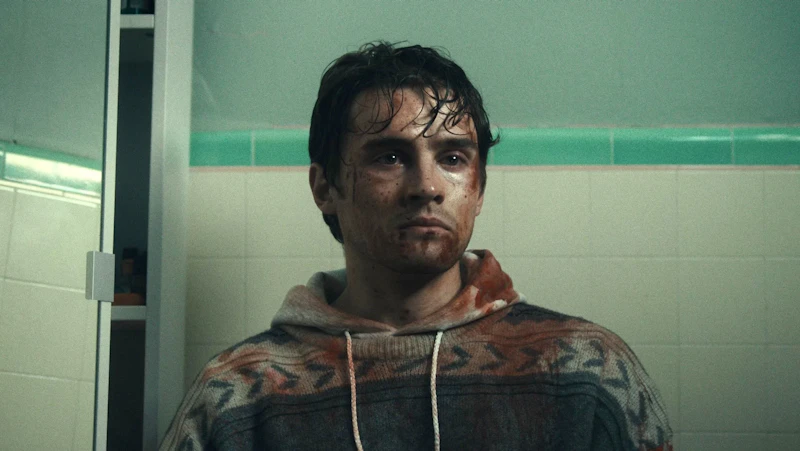
In 150 years of cinema history, there have been films that inaugurated trends, and films that changed the way movies are made. Scarface and The Public Enemy inspired countless gangster pictures; The Maltese Falcon spawned subsequent films noir; Porky’s and American Pie created a deluge of teen sex comedies. They were trendsetters, but they didn’t change the movie industry. Easy Rider did, along with Star Wars and Pulp Fiction. Still early in the heady days of a real sleeper hit and extraordinary commercial success, it’s hard to guess how much of an impact Obsession will ultimately have—on pop culture, its cast, its crew—but at this point the film is a watershed moment for film financing and independent production.
Written and directed by Curry Barker, Obsession was made for $750,000, a number that shouldn’t be shocking in an era of affordable digital cinema cameras, infinite takes, and instant replay. It doesn’t look like The Blair Witch Project or Paranormal Activity, the only other American films that grossed $100 million against a budget under a million dollars. Obsession will likely go on to double that, and two weeks into its run, it’s become the kind of word-of-mouth phenomenon that was rare even in the pre-pandemic era. For many people in their teens and 20d, Obsession may be their first opportunity to participate in making a sleeper hit, a collective activity people took for granted when movies were the pinnacle of pop culture. Obsession will endure as one of the few memorable and noteworthy films of the 2020s, the worst decade in cinema history.
Don’t get me wrong, the movie itself is ridiculous and means nothing, but it’s remarkably well-made and really got under my skin. Obsession looks better than most movies released in theaters this decade, and for whatever reason, I keep thinking about Indiana Jones and the Dial of Destiny, which cost half a billion dollars and looked like used coffee grinds. Where did all the money go? Considering nearly everyone on the business side of moneymaking is a soulless parasite, it was probably pocketed; eight figures went to Harrison Ford, whose disdain for the role is obvious even on the poster; God only knows how much was spent on barely legible CGI. Why is everything like this now? Why are all movies so poorly lit? It’s obvious why they’re mostly uninspired and insipid—never underestimate the decline of intelligence across the board—but why are they lit like caves? Digital cinema has been in theaters for two decades—how has it all gotten worse?
Obsession isn’t a technical marvel; in fact, its familiar film grammar and impressive special effects, practical and computer generated, are what make its budget so striking. Watching Obsession felt like pulling the curtain on the Wizard of Oz with one hand in the till. Besides producer boosters, it’s clear that actor salaries need to come back down to Earth and more films need to be made. The only reason Netflix paid Brad Pitt, David Fincher, and Quentin Tarantino $20 million for The Continuing Adventures of Cliff Booth is because they draw a considerable audience on their names alone. This was common in Hollywood in the 1990s and 2000s, but for various reasons, the bench is short for cast and crew and fewer films are being released in theaters than any time in recent history. Too much money is being spent and stolen without any of it ending up on the screen; again, Obsession is plain proof that you don’t need seven figures to make a hit movie that looks like “a movie.”
—Follow Nicky Otis Smith on Twitter: @NARCFILM