
A good candidate for the most miserable moment in American music is provided by Laurie Anderson on her song "Walk the Dog" (1981):
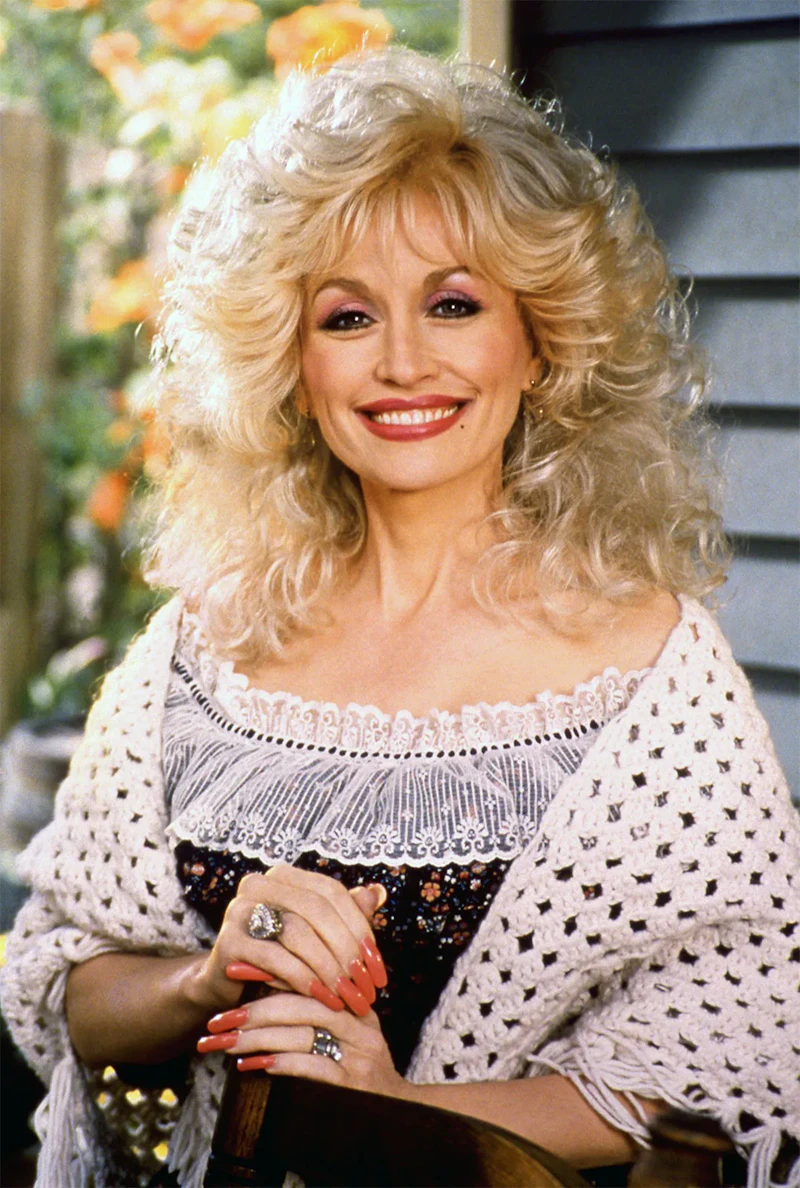
I turned on the radio and I heard a song by Dolly Parton.
And she was singing:
"Oh! I feel so bad! I feel so sad!
I left my mom and I left my dad
And I just want to go home now
I just want to go back to my Tennessee mountain home now"
Well, you know she's not gonna go back home.
And I know she's not gonna go back home
And she knows she's never gonna go back there.
It's not surprising that Laurie Anderson would regard Dolly Parton as a fool or a con; I don't think Anderson is capable of detecting sincerity. But she also regards Dolly as a kind foil, picking her out from among all country artists for ridicule. They’re close contemporaries, and might even look similar. It's hard to tell because they’re both so highly stylized. But they deploy opposite personae and opposite aesthetic approaches. Laurie’s regarded by all as an avant-garde artist, while Dolly’s popular and traditional.
I wish Parton had fired back, singing perhaps that Anderson will never really return to Greenwich Village from Alpha Centauri or wherever she's been hanging out noodling with synthesizers and chatbots, or throwing out a diss track about how Lou Reed was a miserable inarticulate lout. Dolly and Laurie had a beef, but only Laurie was nasty enough to record the insults, pathetic and self-indicting as they may be.
And Laurie was bizarrely and grotesquely and gratuitously wrong about Dolly, who returned and returned and returned to her home region east Tennessee, and whose "Tennessee Mountain Home" is a beautiful song, one of dozens she wrote about her home place, instantiating one of the most basic themes of country and bluegrass music. The beauty and sincerity of that material is precisely why someone like Laurie Anderson hates it.
However, Dolly did depart from East Tennessee, eventually going about as far as you can go. She was the biggest "crossover" artist in the first golden era of country crossover, circa 1980, represented by such questionable developments as John Travolta under a Stetson in Urban Cowboy or the career of one "Eddie Rabbitt."
I was beginning to work as a music critic at that moment. And I was a fanatic for hardcore traditional country music. My artists were people like Merle Haggard, Tammy Wynette, David Allan Coe. I loved many Dolly albums and songs, of course. I regarded them as consisting of magnificent, original, traditional songs, captured in the most supple and beautiful soprano the world had ever heard. So I got annoyed with her as she migrated into pop.
In the late-1970s and early-80s, Dolly seemed to put out an album every few months, and I was assigned here and there to review them. They just got less and less country, less and less distinctive, and less and less good, for years on end. If you deleted Dolly's albums from about 1977 with Heartbreaker (featuring "Here You Come Again") to at least 1990, when she sang "Take Me Back to the Country" almost desperately, you'd be left with a better oeuvre, overall.
I don’t ever want to hear "Islands in the Stream" or "Real Love," ever again. I thought the crossover period was a terrible betrayal of the genre that would likely prove fatal to it. I blamed Kenny and Eddie, alright, but then again I didn't care about them. Tammy Wynette's attempts to amp up the sophistication were just sad. But Dolly's switch to pop music, I thought then, was treason.
Also, the music wasn’t good. The pop material didn’t adequately showcase Dolly's voice, which was also strained in the period. She was working all the time. As I sorted through album after album becoming more and more irritated, I replaced Dolly in my head and on my turntable with Emmylou Harris, who had a strikingly similar voice and, despite her origins in hippie rock, an indelible commitment to traditional country music. Emmylou was still sounding like the Louvin Brothers while Dolly was emulating the Gibb Brothers and heading to the disco. She stopped writing her own material for a while, contributing no tracks to the ironically titled Dolly, Dolly, Dolly (1980), for example. By the late-1980s, her albums (Rainbow, for example) ceased charting altogether, and weren’t very good.
But by 1990 she was working on the return of the prodigal. She stripped the disco and pop elements, and recommitted to traditional country. She made a beautiful series of bluegrass albums that sounded like they came straight from the holler, though with the best pickers in the world. "I went back home and fasted," she told Billboard, "not so much in a religious way but as a means of humbling myself and getting into the spirit of things. I ended up with 37 of the best songs I'd written in years, if not the best ever." Her albums The Grass is Blue, Little Sparrow, and (in particular) Halos and Horns (2002) are among her loveliest.
It's interesting that she describes herself as "fasting," recovering from the sweetness, slickness, and excess of the pop records, returning to her home place. Dolly lived long enough to realize what was so valuable about herself and her home. She made a series of beautiful records that stood as a self-critique of her crossover period. It embodied musically the sort of return that Laurie Anderson ridiculed.
And all of country music returned as well, and repeatedly, in the neo-traditionalist phases in the early-1990s, and right now with artists like Ella Langley. Dolly, I hesitate to report, had a last crossover moment too: 2023's Rockstar, on which she covered "Night Moves," "Purple Rain," and "Stairway to Heaven." I hope it was more fun making it than it is listening to it.
But there was also a late re-return, on her last collaboration with bluegrass masters and recovery mavens the Grascals, which appears on their fine new album Not That Gone. The song, Broken Angels, ends with Dolly inviting us to accompany her to heaven and singing us there: a homegoing for her and for us as well.
—Follow Crispin Sartwell on X: @CrispinSartwell