
The best documentaries of recent years have been investigative, because they lend more credence to the notion that nonfiction is a medium for auteurs. Archive footage, while essential in many cases, is harder to build a narrative around because it isn’t told through the lens of the filmmaker, and often can only offer a small piece of a larger story. There are cases in which archive footage can be augmented by new interviews or research, but these work best when there’s an established or well-known subject for which a significant backlog of audio visual materials are accessible. There are occasionally specific instances in which there’s a trove of footage sitting around, and it’s up to a motivated documentarian to piece it together. Teenage Wasteland is one of those cases because the work was already done; what filmmakers Amanda McBaine and Jesse Moss needed to do was contextualize it.
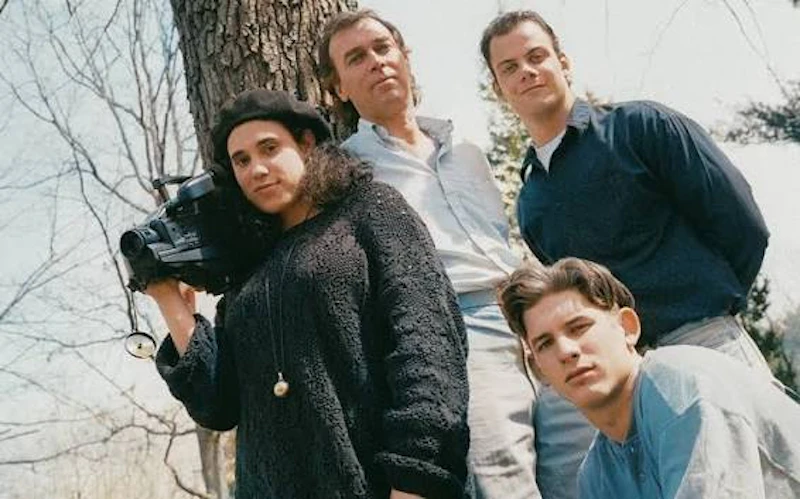
Teenage Wasteland is about upstate New York’s Middletown High School “Electronic English” class, run by the beloved teacher Fred Isseks, who led his students into a real investigation starting in 1991. Technology classes are now part of many high school curriculums, but Issek’s idea was a novelty at the time, only made possible due to the camera and editing equipment that the school had access to. As part of a class project, Issek’s students looked into the local landfill, rumored for years to be a site for dumping toxic waste into the water supply. It’s the type of small-town rumor that’s like a folktale until someone can evaluate the evidence, and what these teenage reporters found was damning. Not only were there significant records that indicated illegal pollution, but a conspiracy that involved several city council members and the Italian mafia.
McBaine and Moss had previously made the excellent documentaries Boys State and Girls State, which explored week-long summer programs in Texas where teenagers participated in a student government simulation. Both films succeeded because they covered the ins-and-outs of the campaigns and meetings like they were a legitimate political documentary, and identified outspoken participants compelling enough to be characters. What the duo had at their disposal in Teenage Wasteland is the extensive camcorder footage and news reports compiled by the students from 1991 to 1997, alongside contemporary interviews where they reflect upon the scale of the assignment. That the presentations that they originally made were so polished and well-researched doesn’t just make Teenage Wasteland a more compelling watch, but is justification for why this project was worth investigating.
It’s through its specific circumstances that Teenage Wasteland is one of the best documentaries about journalism, because it has the benefit of meditation. There’s no shame from the former classmates during the reunion, given that their reporting did lead to some notable changes within Middleton’s public health policies. At the same time, the fact that a documentary had to be made about the story does provide an undercurrent of melancholy; that their report was unknown outside of the Hudson Valley region would suggest that it didn’t result in a widespread campaign against municipal corruption and pollution in the area, especially when similar cases have only ballooned since. Not all of the students have kept in touch since graduation, and only a handful pursued journalism after graduation.
McBaine and Moss are now involved in several documentaries about remarkable youth organizations, but Teenage Wasteland isn’t as interested in age as status. Journalism schools teach about specific guidelines of objectivity and process that are held up as ideologically authoritative, but they’re idealistic for those who have participated in multi-faceted publications involved in realities of the business. There was no such advantage for the Middleton High School team; they had no status or corporate parents to protect, and were free to be as interrogative as possible. It’s a compelling argument for the sake of independent media, given that the guilty parties are far more honest with reporters who they don’t deem as being “serious.” It’s also an interesting window into a specific period of time in which the internet hadn’t made it possible to broadcast every single update without the touch of professionalism; since the news couldn’t just be dumped within a digital canvas, the packages had to be convincing and commanding enough for anyone to take notice of them.
The manner of objectivity is also put under the microscope in Teenage Wasteland. The pollution in Middleton was newsworthy for its public concerns, but it was also a case that impacted many of the students because of the generations of cancer victims linked to the landfill, including some of their family members. It’s a case that they were invested in, but that didn’t mean that diligence wasn’t required; it’s because of the “fair and balanced” approach that their work ascended to the heights of true journalism, and not just student activism.
Beneath an inspiring story of the powerful held accountable is an even more fundamental one of the “great teacher” myth, but Isseks isn’t the film’s protagonist. A great teacher, at least in the eyes of Teenage Wasteland, is one who offers guidance without a blueprint; Isseks had given the outline of an assignment, but the extent to which it became a movement was due to the students’ commitment. It’s befitting for a film so critical of systems of power that Teenage Wasteland doesn’t wax poetic about the importance of education, but does show the advantage of allowing ambition to flourish.